
By Caty Romero, April 2026
What if the reason students struggle in math isn’t because they don’t know what to do…
but because they can’t see what’s happening?
Too often, students are asked to choose an operation before they truly understand the relationships in a problem. They guess, apply a procedure, and hope it works. But mathematics was never meant to be a guessing game—it is about making sense of relationships.
This is where bar models, also known as tape diagrams, can transform learning.
Making the Invisible Visible
Bar models are simple rectangular diagrams that represent quantities and their relationships. They allow students to see the structure of a problem before working with numbers and procedures. Instead of asking, “What operation should I use?” students begin asking, “What is happening in this situation?”
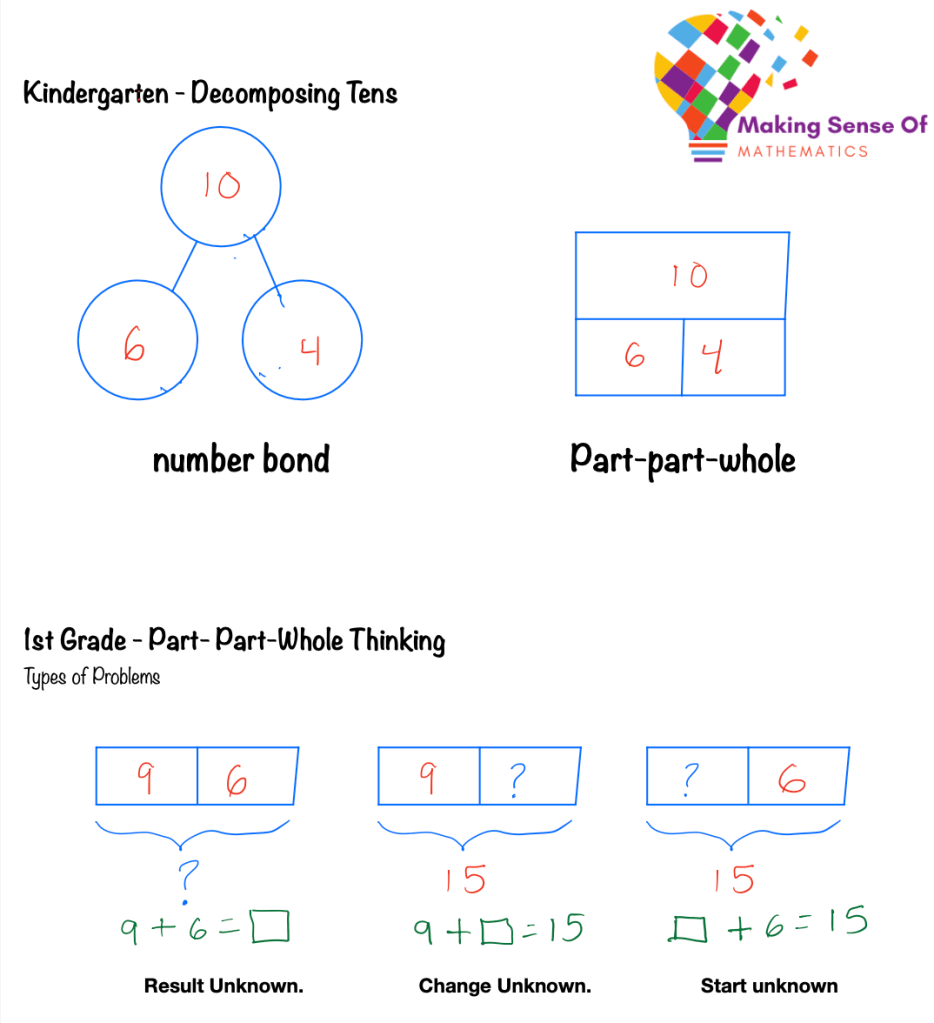
At their core, bar models help students identify the whole, the parts, what is unknown, and how quantities relate. This shift is powerful because mathematics is not just about numbers—it is about understanding relationships.
Bar models are not just another strategy and it’s definitely not new; they are central to Singapore Math, a national approach to teaching mathematics developed by Singapore’s Ministry of Education in the 1980s, designed to build deep conceptual understanding, strong problem-solving skills, and mathematical reasoning. Today, it has influenced curricula worldwide, including the Common Core, where these models appear as tape diagrams.
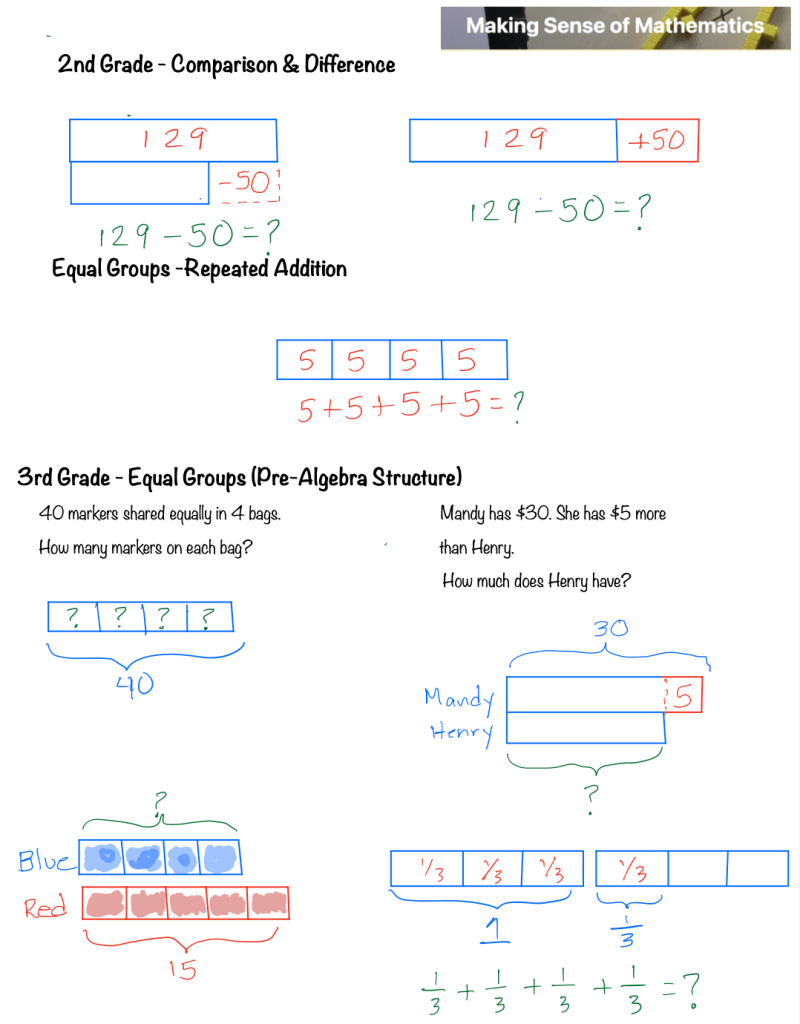
Built on the Concrete–Pictorial–Abstract (CPA) progression, this approach develops understanding in three stages. Students first explore concepts with materials, then represent them visually, and finally express them symbolically.
Bar models live in the pictorial stage, serving as the bridge between hands-on learning and abstract equations.
From Procedures to Understanding

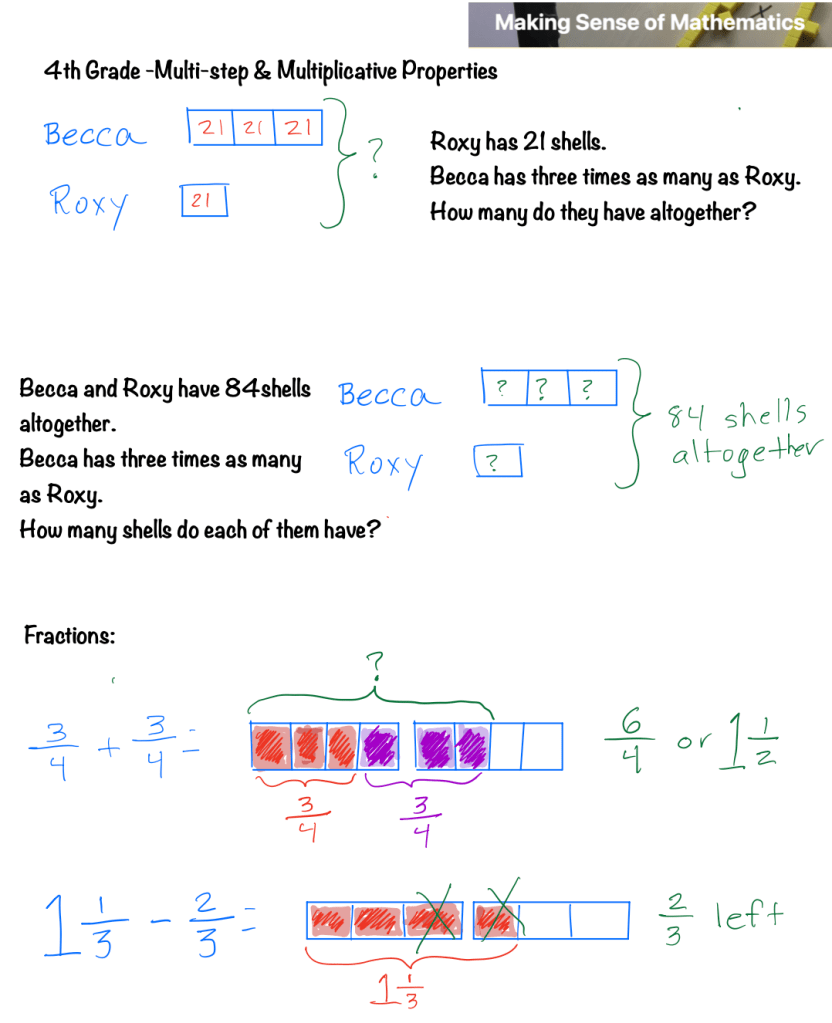
The power of bar models lies in how they shift student thinking. Instead of memorizing steps, students begin to represent situations, reason about relationships, and choose strategies based on understanding.
This is especially impactful in word problems. For many students, the challenge is not the calculation—it is making sense of the situation. Bar models provide a clear visual structure, helping students identify what is known, what is unknown, and how the quantities connect. This clarity replaces guesswork with reasoning.
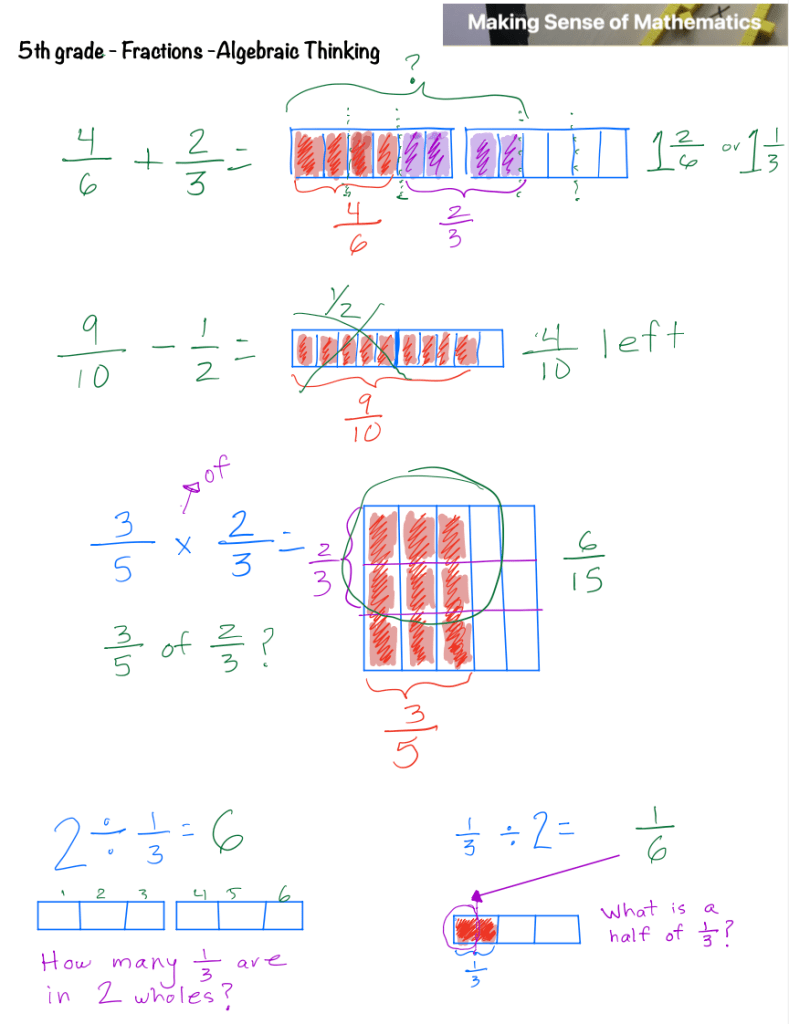
Building Algebraic Thinkers Early
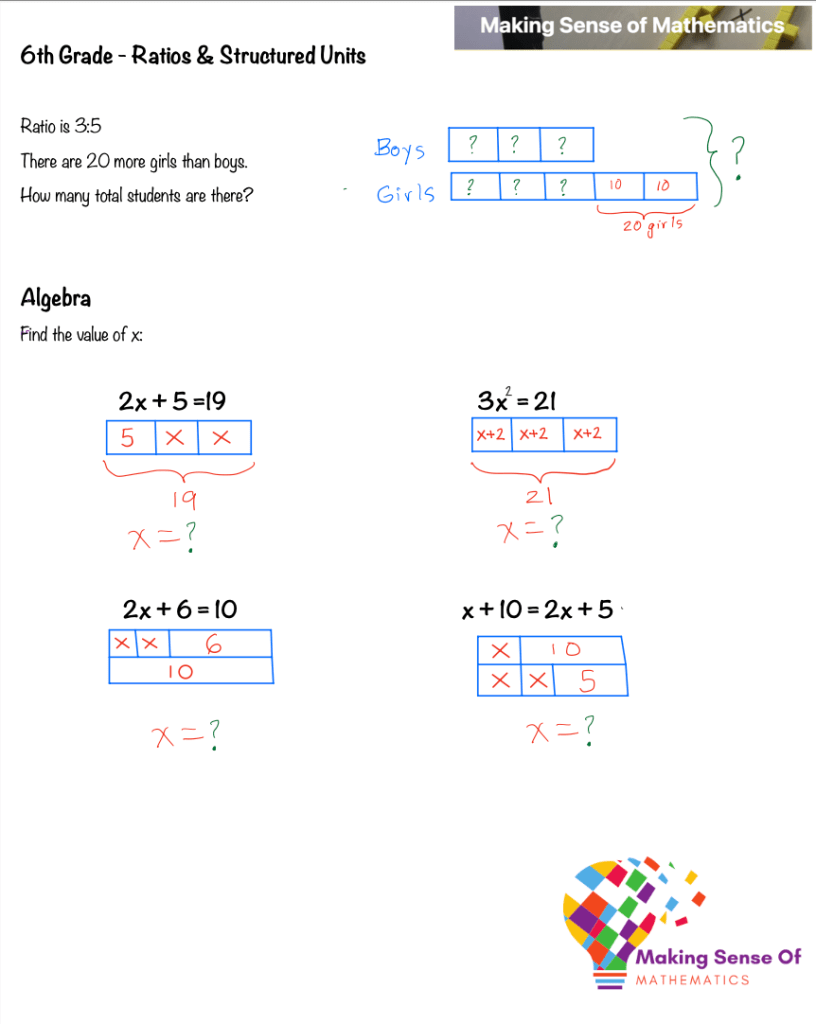
Perhaps most importantly, bar models lay the foundation for algebraic thinking. Long before students encounter formal equations, they are already representing unknowns, working with equal groups, and recognizing structure.
When students later see expressions like x + 5 = 12 or 3x = 18, these are not abstract symbols—they are familiar relationships they have already explored visually. Bar models become the bridge from arithmetic to algebra.
A Shift in Practice
To fully leverage bar models, we need to rethink how we teach mathematics. Too often, procedures come first, visuals come later, and abstraction happens too quickly. However, research suggest a different approach:
Students need to see the math before they can symbolize the math.
Bar models are not just for struggling learners or occasional word problems. They are a core representation tool that supports all students in developing deep, conceptual understanding.
What This Looks Like in the Classroom
In classrooms where bar models are used effectively, you will see students drawing before calculating, exploring multiple solution paths, and engaging in meaningful mathematical discussions. There is less reliance on tricks and keywords, and more emphasis on reasoning and communication.
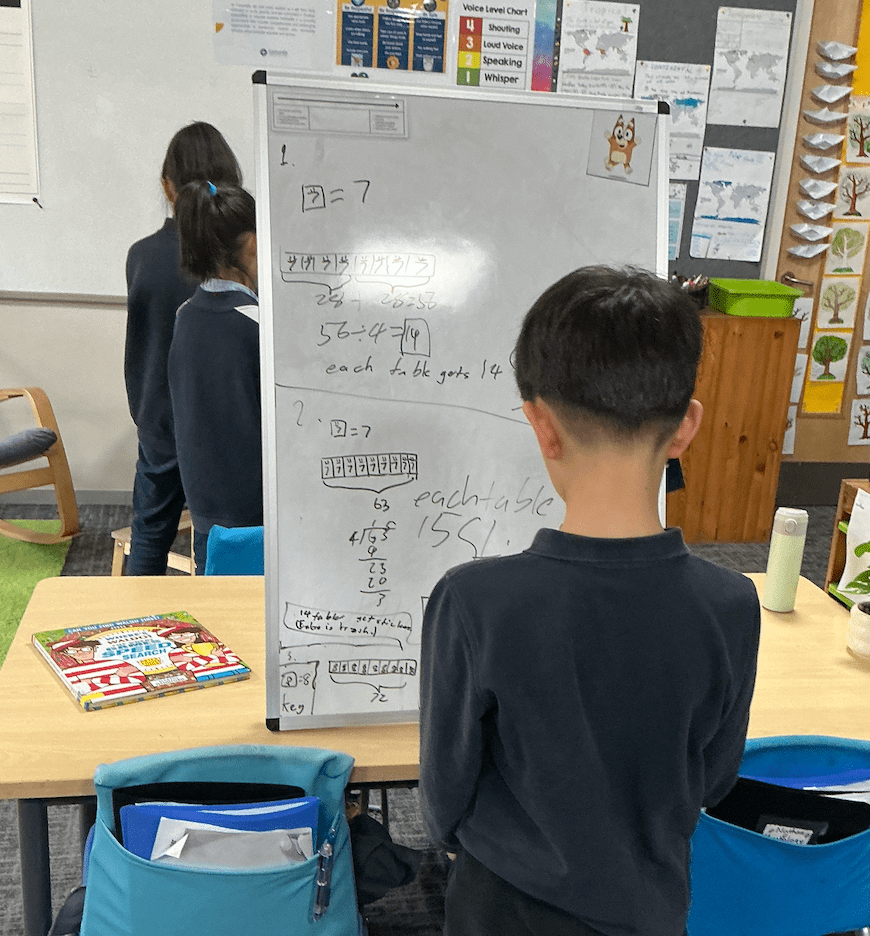
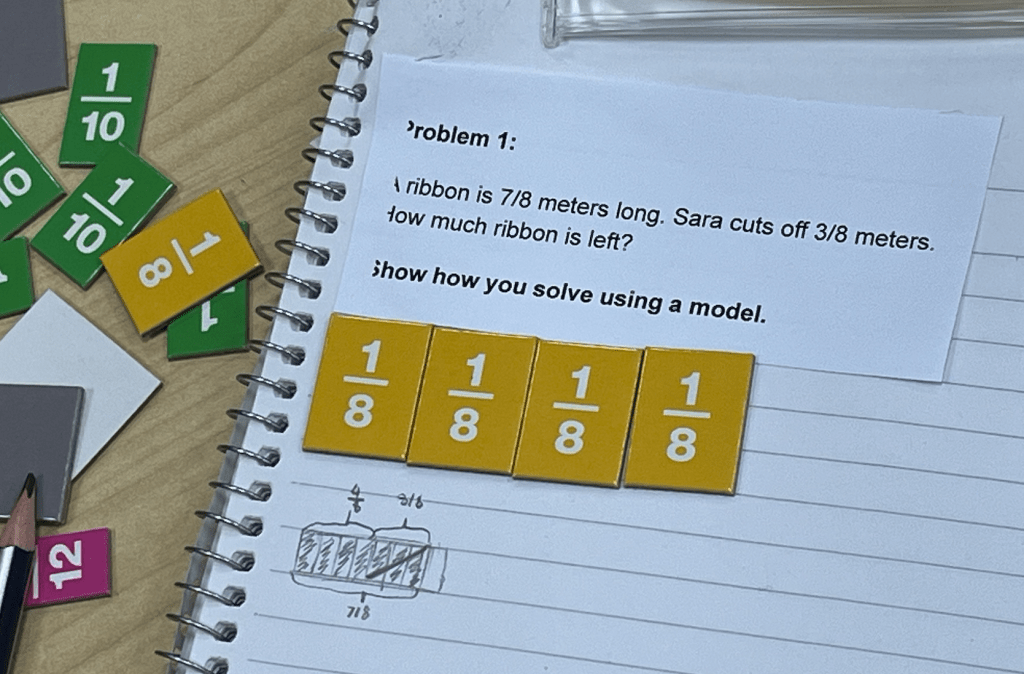
Most importantly, students begin to understand why their mathematics works.
A Call to Action
If we want students to become true problem solvers—capable of reasoning, modeling, and thinking mathematically—we must give them tools to see structure. Bar models do exactly that. They transform mathematics from something students simply do into something they can truly understand.
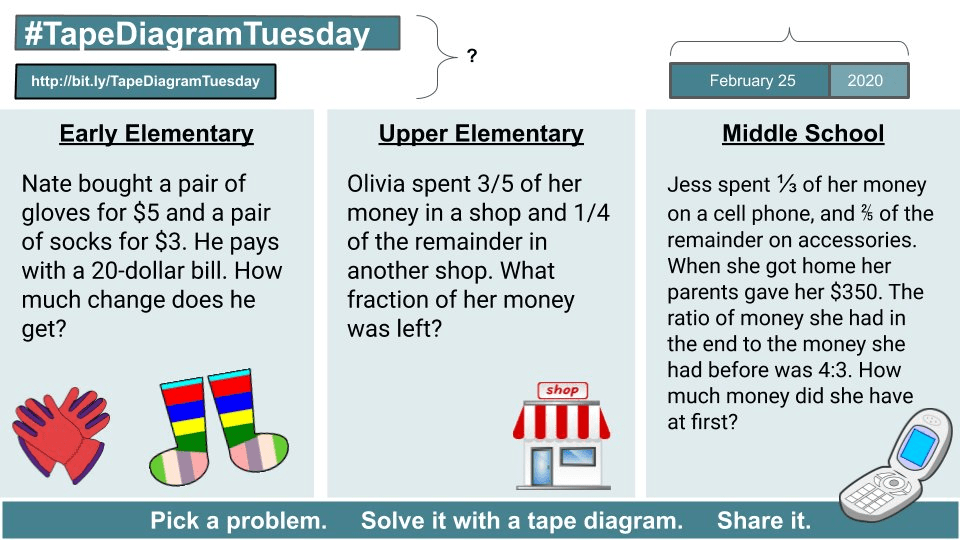
Start small. Introduce one problem a day where students represent their thinking with a bar model. Encourage them to draw before solving and to explain what their model shows. Value the representation as much as the answer.
Because when students can see the math, they no longer have to guess—they can make sense of it.
About the Author
Caty Romero
Founder, Making Sense of Mathematics
Caty Romero is an international mathematics consultant and Director of Teaching and Learning at MYIS International School in Bangkok. Through her work with schools around the world, she supports teachers in building student-centered mathematics classrooms grounded in problem solving, reasoning, and deep conceptual understanding.
Through Making Sense of Mathematics, Caty partners with schools to design meaningful professional learning experiences—helping educators move beyond procedures and toward instruction that empowers students to truly make sense of mathematics.
At the heart of Making Sense of Mathematics are some simple beliefs:
“When students can see the math, they can understand the math—and when they understand it, they can own it.“
“Whoever is doing the talking in your math class, is doing the learning.“