
Centering Math on Problem-Solving
In today’s math classrooms, the goal isn’t just mastery of procedures—it’s nurturing students who think like mathematicians. This means moving beyond computation and encouraging learners to tackle meaningful, context-rich problems.
Here are some ideas to make that switch in your classroom:
1. Let Students Drive the Thinking
Shift from “I do, you copy my strategy” to a classroom where students take the reins, exploring problems and generating strategies. As I explain on the video, educators should focus on creating opportunities for multiple solution paths and encouraging student innovation .
2. Use Rich, Open-Ended Tasks

Prioritize problems that:
- Are deeply mathematical
- Allow multiple entry points and representations
- Encourage discussion, explanation, and reflection
This scaffolds student thinking, builds conceptual understanding, and fosters resilience.
3. Scaffold Without Solving
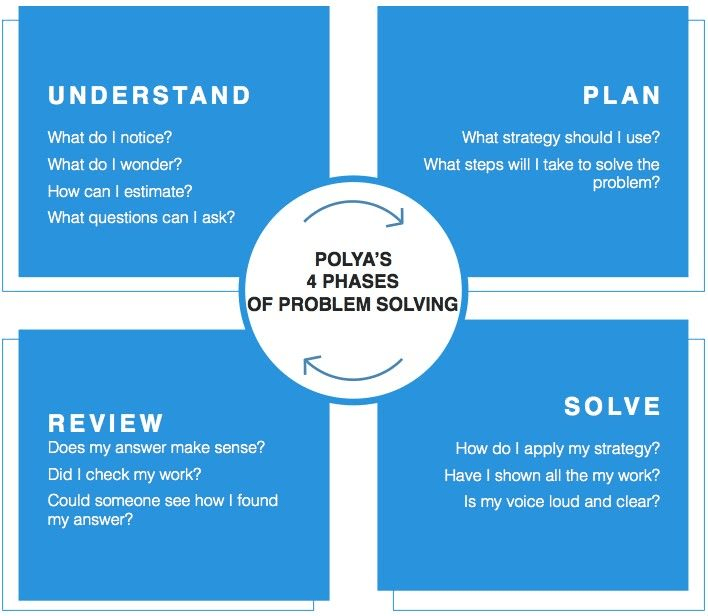
Draw from George Pólya’s timeless framework—Understand, Plan, Solve, Reflect. Guide students with prompts like:
- “What do you notice?”
- “Can you represent this problem visually?”
- “How could you check your answer?”
These nudge independent thinking without spoon-feeding steps.
4. Offer Time, Tools & Conversation
Give students:
- Adequate time to wrestle with problems – productive struggle
- Manipulatives, sketches, and numberless-start strategies
- Opportunities to share thinking aloud and reflect with peers – the person doing the talking is the person doing the learning!

This supports deeper sense-making and metacognitive growth.
5. Choose Problems with Purpose
Select tasks that balance challenge, accessibility, and relevance. Use strategies like:
- Word problems tied to reading comprehension
- Concrete-Pictorial-Abstract approaches (à la Singapore Math)
These meet students where they are while providing cognitive stretch.
Why This Matters
Research shows that, compared to traditional instruction, a problem-solving focus leads to:
- Stronger conceptual understanding
- Greater flexibility in thinking
- Improved long-term retention
Students develop the tools not just to do math, but to understand and apply it.
Quick Tips for Embedding Problem Solving
| Strategy | Classroom Move |
|---|---|
| Anchor charts | Co-create visual charts of student strategies |
| Numberless starts | Begin problems contextually before introducing numbers |
| Peer reflection | Encourage students to share and critique reasoning |
| Open-ended tasks | Present problems with multiple correct solutions and representations |

Final Thoughts
When problem-solving is at the heart of math instruction, students learn to navigate complexity, justify their thinking, and apply mathematics creatively. Rather than teaching about math, educators invite students to learn through math—building a foundation that extends far beyond the classroom.
And remember….. we don’t teach standards, we teach students. We teach them how to think mathematically!
 Making Sense of Mathematics
wow! What a wonderful way to engage every learner and not only learn math but experience math in real life scenarios. Well done!
LikeLike