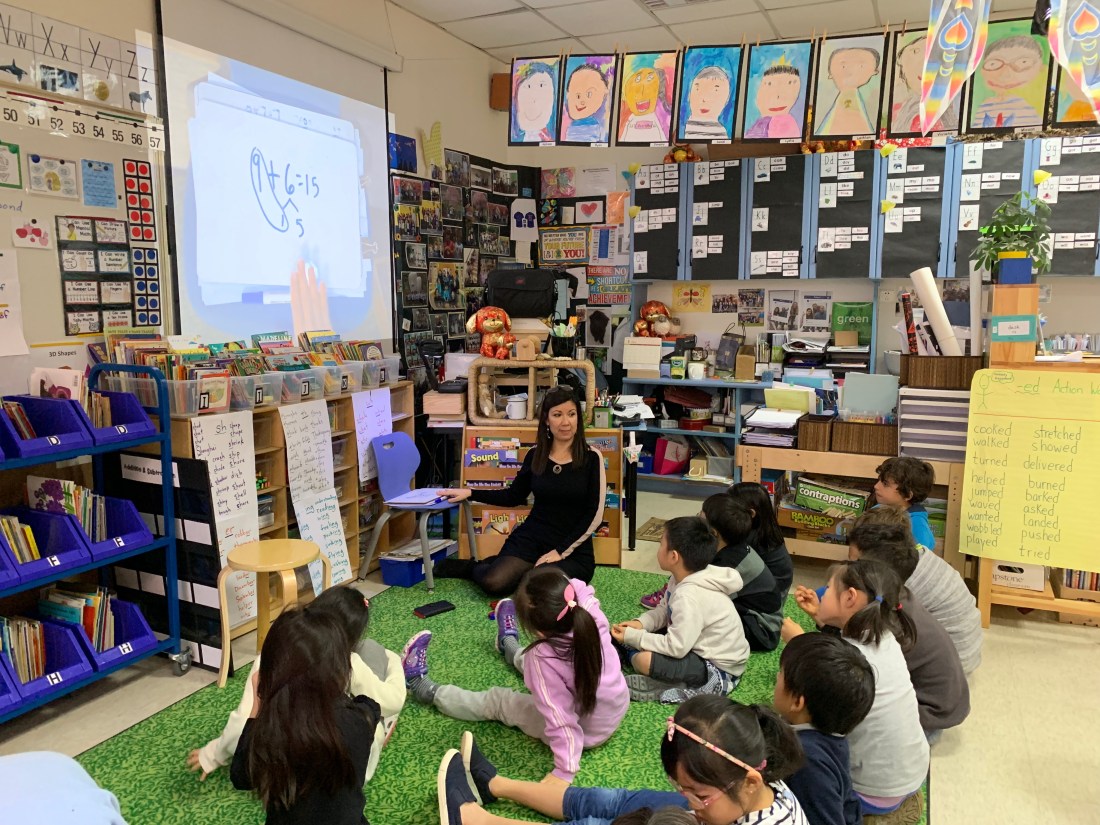
As an elementary math coach, one very important part of my job is to be in the classroom noticing all the small good things students are doing or saying, as well as the different teaching moves that shift students’ thinking about how they approach a math problem. I usually send an email to the teacher … Continue reading Essential Component of an Effective Math Lesson
Year: 2019
Differentiating: Using parallel tasks in your math lesson
At the start of this school year in our elementary school, we decided to focus on differentiation strategies all teachers can use in their classroom. To be more specific, we invited all teachers to explore strategies they can use during Tier 1 instruction (RTI), not necessarily differentiating for students with moderate or severe disabilities, but … Continue reading Differentiating: Using parallel tasks in your math lesson
Are You Asking the Right Questions?
How do you know you are pushing your students’ thinking? The questions you ask in class can either push their thinking, and let them show you how they thought about solving a problem; or they can shy away if they feel they don’t have the right answers. “Problem solving is the major theme of doing … Continue reading Are You Asking the Right Questions?
Convince me!
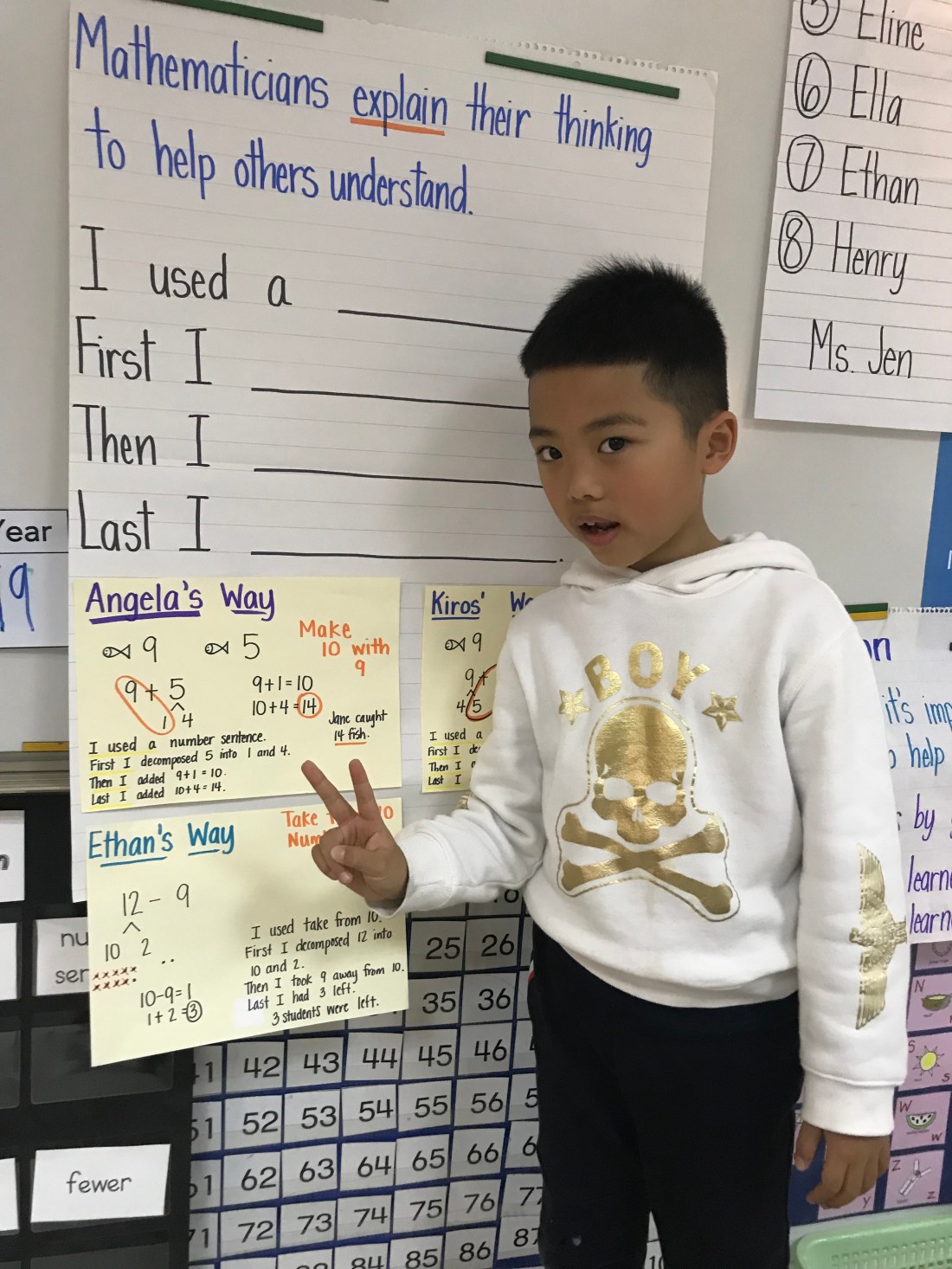
Communicating & Reasoning in Mathematics 1st grade class ready to use sentence starters to explain how they solve problems. A few years ago, a good friend of mine, who was teaching kindergarten, told me that she had this conversation with one of her 5 year old students: Student: “Miss Koshika, why don’t you trust me?” … Continue reading Convince me!
Introducing Number Talks
What is a Number Talk? A Number Talk is a short, powerful tool for helping students develop computational fluency and number sense. Number Talks are not necessarily directly related to the math curriculum. They are not intended to replace current curriculum or take up the majority of the time spent on mathematics (5-10 minutes). Number … Continue reading Introducing Number Talks
How many fourths are in one half?
Last week, I had a great time teaching & learning division of fractions with one of my teachers. I have not stopped thinking about how models really provide a visual representation of what dividing fractions really mean. Our students use concrete models to gain understanding of what fractions are, how to put them together, take … Continue reading How many fourths are in one half?
Using a Student-Centered-Approach in Your Math Lesson
Let's explore a lesson using an upside-down approach to teach math. It is basically the opposite from the traditional I-do-you-do approach, where the teacher lectures the class with a specific way to solve a problem depending on the content, and students repeat the same steps the teacher just showed, but using different numbers. In this … Continue reading Using a Student-Centered-Approach in Your Math Lesson
That Day We Added It All Up 那一天,我们聚在一起学数学
As teachers, we continue to learn new approaches to explore mathematics and are faced with new opportunities to provide the best learning experiences for our students. We are constantly participating in different professional learning to keep our teaching practices in line with the most up-to-date research on how students best learn. We collaborate constantly with … Continue reading That Day We Added It All Up 那一天,我们聚在一起学数学
Making Sense of Adding Fractions
If you are introducing fractions in your class, allow students to use unifix cubes to make sense of what fractions really are and look like. You can start with fractions that have the same denominators so students understand that the whole is made of a number of parts. A fraction is part of a whole. … Continue reading Making Sense of Adding Fractions
What does re-grouping really mean?
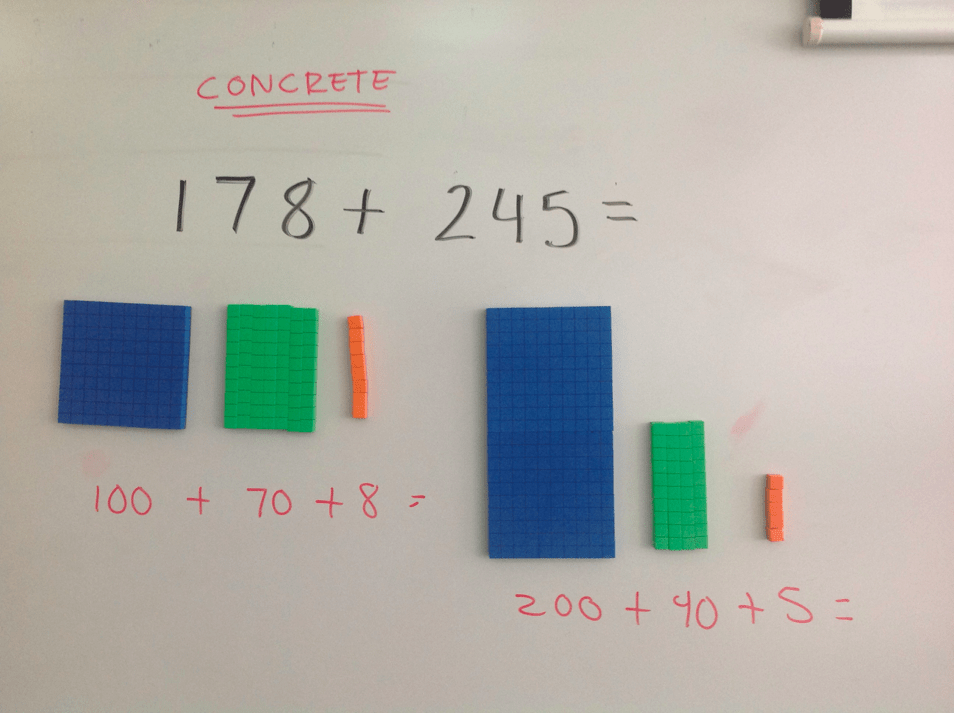
I have been teaching for about 29 years. Most of those years in elementary. Math has always been my most favorite class to teach, but as most teachers did in the past, I used the I-do-you-do approach. I did my best at explaining how to solve problems using manipulatives and pictures, and quickly moved into … Continue reading What does re-grouping really mean?